Most people scoping a new gold plant ask the same thing early on: CIL or CIP? Both are cyanidation routes that recover gold onto activated carbon — the only real difference is when the carbon adsorption happens. In CIL it runs in the same tanks as the leaching; in CIP the ore is leached first, then pumped across to a separate train for adsorption. One extra tank train, one step later, and that single choice is what everything else below comes back to.
Rather than another textbook definition, I'll show you what each circuit actually looks like in plants we've built — and then how we decide between them.
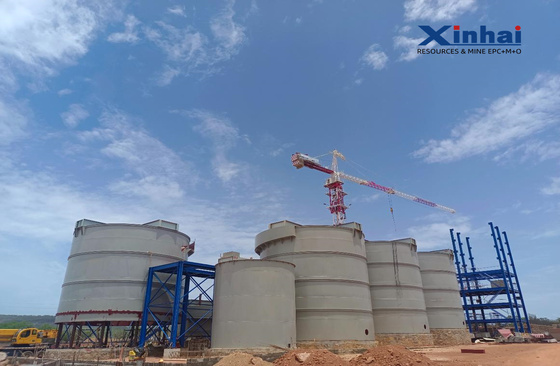
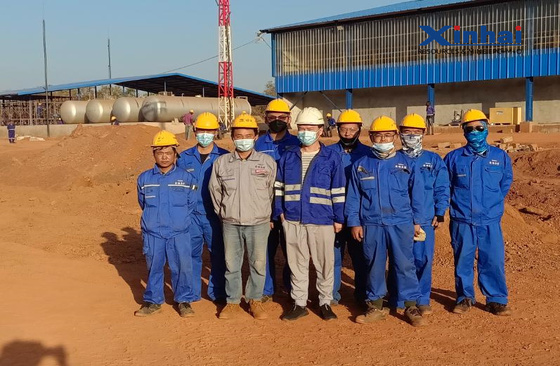
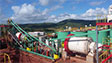
Zimbabwe Reden 500 t/d gold EPC+M+O plant — one of the cyanidation plants in Xinhai's self-operated portfolio. Photo: Xinhai Mining.
What Is CIL (Carbon-in-Leach)?
CIL leaches and adsorbs in the same agitated tanks: cyanide dissolves the gold while activated carbon already in the tank catches it. Loaded carbon runs counter-current down the train to elution and electrowinning. No separate adsorption circuit means fewer tanks, less space, and a faster commissioning — which is the whole reason people pick it. On amenable oxide ore recovery usually sits in the 92–98% range, but that number is the ore's doing, not the circuit's.
What Is CIP (Carbon-in-Pulp)?
CIP runs the same chemistry in two steps: leach the slurry on its own until dissolution is finished, then pump it across to a separate train where carbon picks up the gold. You pay for those extra tanks, but leaching and adsorption are decoupled — cleaner carbon handling, easier maintenance, and one stage can be fixed without touching the other. Recovery is comparable, roughly 90–96% on amenable ore, again set by the ore rather than by the label.
Here's what that actually looks like in plants we've delivered. In Tanzania we run a 1,200 t/d whole-ore CIL circuit on blended oxide (2.4 g/t Au) and sulfide (10.7 g/t Au) ore — two-stage closed-circuit grinding to 85% −200 mesh, then straight into CIL adsorption and bullion. In Guinea we built a 3,000 t/d CIP plant where leaching and adsorption stay in separate trains so each is controlled on its own. Same chemistry, two layouts, both chosen for the ore and the owner's constraints rather than for fashion.
CIL vs CIP: Side-by-Side
Factor | CIL (Carbon-in-Leach) | CIP (Carbon-in-Pulp) |
Leaching and adsorption | Simultaneous, same tanks | Sequential, separate tank trains |
Number of tanks | Fewer | More |
Capital cost | Lower | Higher |
Construction / commissioning | Faster | Slower |
Process control needed | Tighter (integrated step) | Easier carbon management |
Best ore type | Low–medium grade, fine gold | Higher grade, where leach completes first |
Typical recovery (amenable ore) | 92–98% | 90–96% |
Carbon wear | Slightly higher | Lower |
Treat the percentages as a rough guide for amenable ore. Your rock will sit somewhere in or outside those bands, and the test work is what tells you where.
How to Choose
In practice this is rarely a dramatic decision. Here's how we think about it:
· Grade and ore type come first. Free-milling oxide with fine gold almost always goes CIL. If the gold needs leaching to fully finish before it touches carbon, or the head grade is high, CIP is the safer bet.
· Capital and schedule. This is where CIL usually wins outright — fewer tanks, faster to commission. When the budget is tight and you want gold out the door, it's often the deciding factor.
· Who's running it. CIP's separated stages are gentler on a crew that wants independent control of leach vs adsorption. CIL asks more of your day-to-day process control.
· Compliance doesn't care which you pick. Both need cyanide management, detoxification, and tailings handling; dry-stack is increasingly non-negotiable in a lot of jurisdictions. The process changes your layout, not your obligations.
Don't pick from a table. Send us a representative sample and we'll run it — lab scale, and pilot if the ore is awkward. That shows how it actually leaches and how the carbon loads, and takes most of the guesswork out. We've been at this since 1997, and the test still settles more plants than any rule of thumb.
How We Pick the Process
For what it's worth, we don't have a house favourite. Every project starts from the ore and the owner's constraints, and we recommend whichever circuit gives the most recovery per dollar.
Our Mineral Research & Design Institute runs the test work in a CNAS-accredited lab — from exploratory lab tests through to semi-industrial pilot trials — and that data drives a tailored design across crushing, grinding, classification, leach/adsorption, elution, electrowinning, and tailings. Where an owner needs it for finance or permitting, designs are done to Chinese standards and to JORC, VALMIN, and NI 43-101.
Across the 600+ EPC+M+O plants we've delivered in 100+ countries, the pattern is dull and repeatable: CIL where cost and schedule matter, CIP where the ore or the operator justifies the extra tanks. Neither is "better." Done right, both should get you to design recovery, past the environmental checks, and into steady production without drama.
Representative Gold CIL & CIP Plants We Have Delivered
The recommendations above come from real builds, not theory. Below are five typical gold cyanidation plants Xinhai has delivered, spanning both CIP and CIL, from 500 t/d to 3,000 t/d, across West, East, and Southern Africa and Asia. They show how process choice tracks capacity, ore type, and project goals.
1. Guinea — 3,000 t/d Gold CIP Plant
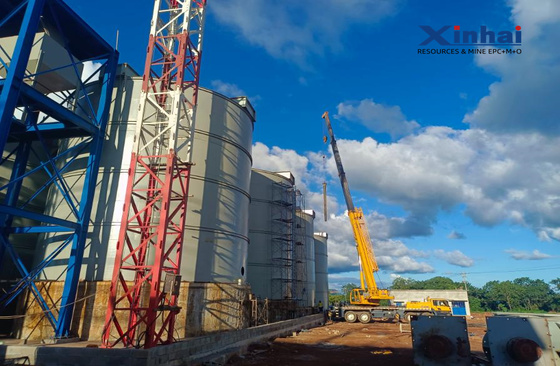
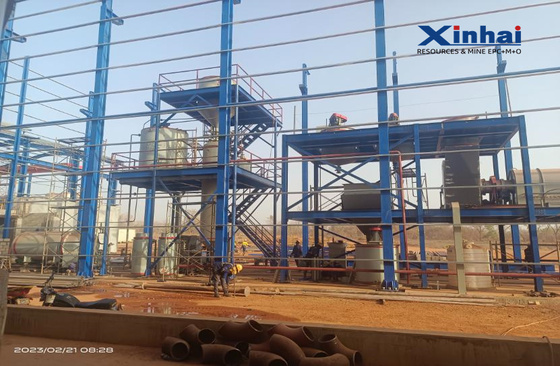
Guinea 3,000 t/d Gold CIP Plant — leaching and adsorption run in separate trains for independent control. Photo: Xinhai casebook.
A large West African CIP (carbon-in-pulp) gold plant, part of Xinhai's Guinea track record that also includes 6,000 t/d and 15,000 t/d gold plants. Built for high daily throughput on site-specific oxide ore. Process: CIP · Capacity: 3,000 t/d · Region: West Africa → See our Gold CIP Production Line
2. Tanzania — 1,200 t/d Gold CIL (Carbon-in-Leach) Plant
-Plant2-1.jpg "Xinhai-Tanzania-Gold-CIL-(Carbon-in-Leach)-Plant2-1.jpg")
-Plant2-2.jpg "Xinhai-Tanzania-Gold-CIL-(Carbon-in-Leach)-Plant2-2.jpg")
-Plant2-3.jpg "Xinhai-Tanzania-Gold-CIL-(Carbon-in-Leach)-Plant2-3.jpg")
Tanzania 1,200 t/d Gold Processing Plant — whole-ore CIL flowsheet on blended oxide + sulfide ore. Photo: Xinhai casebook.A full-industry-chain project designed to process complex co-existing oxide and high-grade sulfide ores. Scope of work covers metallurgical testing, design, equipment manufacturing, installation, civil works, and plant operations. Process: CIL (whole-ore cyanidation) · Capacity: 1,200 t/d · Ore: oxide 2.4 g/t Au + sulfide 10.7 g/t Au · Region: East Africa → See our Gold CIL Processing Line
3. Zimbabwe — Reden 500 t/d Gold Mine EPC+M+O Project
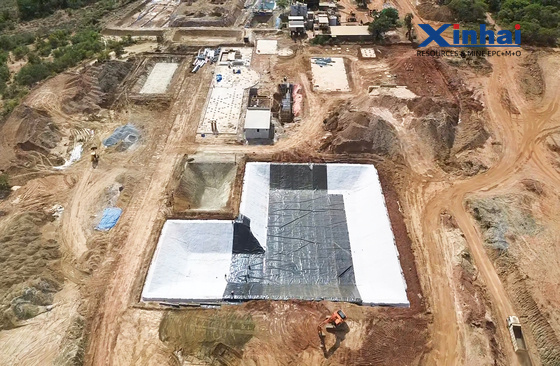
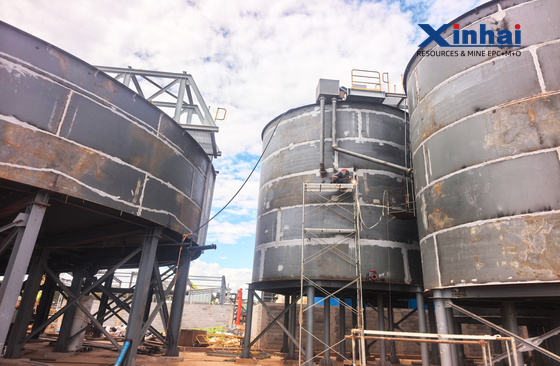
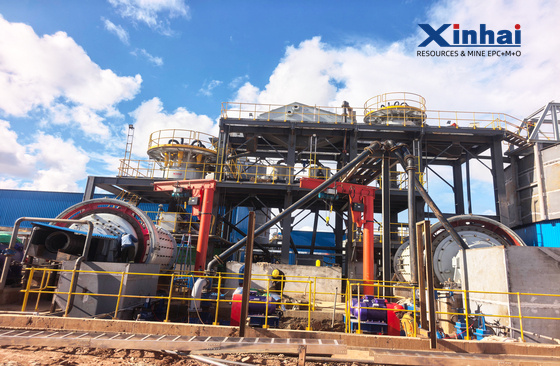
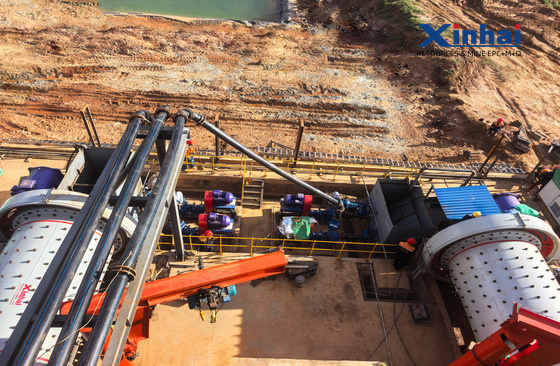
Zimbabwe Reden 500 t/d Gold Mine — Xinhai's self-operated flagship on the Great Dyke Greenstone Belt, commissioned April 2026. Photo: Xinhai.
A custom gold cyanidation flowsheet (gravity concentration + intensive leaching + elution–electrowinning) processing 3.543 Mt of resources at an average 2.45 g/t Au. Powered by a 100,000 m² solar microgrid (17,752 panels) under a full EPC+M+O contract. Process: Cyanidation (CIL-type) · Capacity: 500 t/d · Grade: 2.45 g/t Au · Region: Southern Africa → See our Gold CIL Processing Line
4. Mongolia — 1,000 t/d Gold Processing Plant
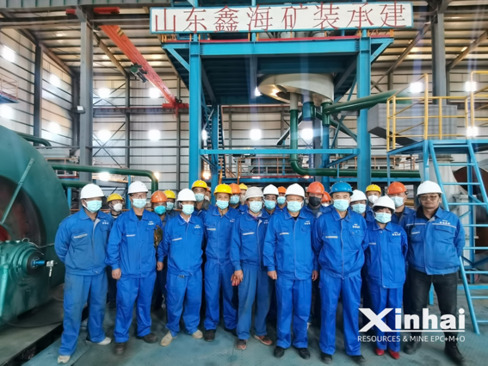
Mongolia 1,000 t/d Gold Processing Plant — crushing and screening section, delivered under EPC+M+O. Photo: Xinhai casebook.
An EPC+M+O gold plant in Mongolia, delivered under Xinhai's full mine-lifecycle service model with a focus on high gold recovery and steady production. Process: CIL · Capacity: 1,000 t/d · Region: Asia → View the Mongolia 1,000 t/d Gold Case
5. Malaysia — 700 t/d Gold Processing Plant
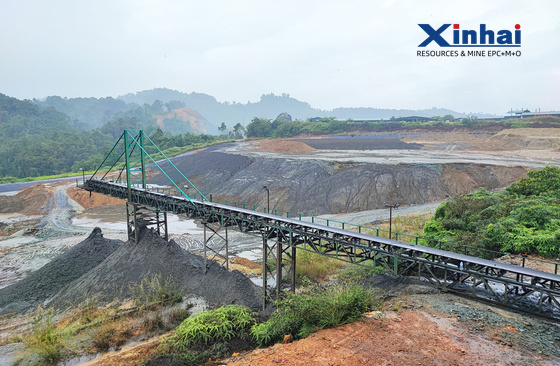
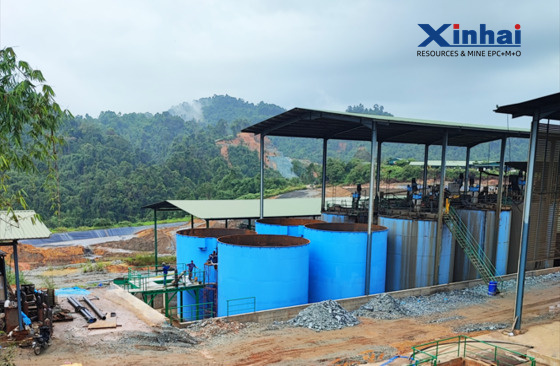
Malaysia 700 t/d Gold Processing Plant — covered CIL tanks and leaching section, EPC delivery for CNMC. Photo: Xinhai casebook.
An EPC gold CIL plant for CNMC, processing ore at Au 4.70 g/t, Ag 4.63 g/t, Fe 20.10%, S 20.55%, delivered under the China–Malaysia mining cooperation framework. Process: CIL · Capacity: 700 t/d · Ore: Au 4.70 g/t · Region: Southeast Asia → View the Malaysia 700 t/d Gold Case
At a glance
Project | Country | Capacity | Process | Region |
Gold CIP Plant | Guinea | 3,000 t/d | CIP | West Africa |
Gold CIL Plant | Tanzania | 1,200 t/d | CIL | East Africa |
Reden Gold Mine (EPC+M+O) Project | Zimbabwe | 500 t/d | Cyanidation (CIL-type) | Southern Africa |
Gold Processing Plant | Mongolia | 1,000 t/d | CIL | Asia |
Gold Processing Plant | Malaysia | 700 t/d | CIL | Southeast Asia |
These five are a small slice of 600+ EPC+M+O projects across 100+ countries. The pattern holds: both CIP and CIL are selected to match each ore and each owner's constraints — CIP where leaching should complete before adsorption, CIL where fewer tanks and a faster build win. Recovery and production figures for each project are documented in its completion report and available on request.
Frequently Asked Questions
Q. Which has a higher recovery rate, CIL or CIP?
A. On amenable (free-milling) ores, both reach high recovery. CIL commonly reports 92–98% and CIP 90–96%. The larger driver of recovery is ore mineralogy and grind fineness, so the process label is secondary to proper test work and design.
Q. Is CIL cheaper than CIP?
A. Yes, in capital terms. Because leaching and adsorption share the same tanks, a CIL plant needs fewer vessels, which lowers both equipment cost and build time. The operating difference is small and depends on carbon wear and power.
Q. Which is better for low-grade gold ore?
A. CIL is usually the better fit for low-grade and fine-grained oxide ores, because simultaneous leaching and adsorption reduces gold loss during transfer and keeps the circuit compact and lower cost.
Q. Is cyanidation in CIL/CIP safe and environmentally compliant?
A. It can be, with the right design. Both routes require controlled cyanide use, detoxification, and tailings management. Many modern plants add cyanide destruction and dry-stack tailings to meet tightening environmental and permitting requirements.
Q. Can Xinhai help me decide without committing to a full project?
A. Yes. The fastest way to de-risk the decision is a metallurgical test on a representative sample. From that we can recommend CIL vs CIP, size the circuit, and give a budgetary estimate before you commit to detailed engineering.
Get a Process Recommendation for Your Ore
If you are weighing gold CIL vs CIP for a specific project, send us a representative ore sample or your existing test data. We will run the metallurgy, recommend the right circuit, and size a plant that hits your recovery and budget targets.
Talk to our engineering team: request a process design or a free consultation via the Gold CIL Processing Line or Gold CIP Production Line pages.


 zz540045886@gmail.com
 Chat
Chat



 Consult
 Message
 Email
Email