A 500 t/d gold processing plant can cost several million dollars — but the number changes significantly with ore type, recovery method, site conditions, and project scope. The ranges below are 2025–2026 order-of-magnitude figures from EPC budgetary estimates we prepared for comparable CIL/CIP projects; they are planning references, not quotations.
How Much Does a Gold Processing Plant Cost by Capacity?
The table is the fastest way to see the range. Capacity, in tonnes per day (t/d), is the first dial that moves the number; each figure is a turnkey EPC range covering equipment, civil works, installation, environmental systems, and engineering in one delivered plant.
Capacity (t/d) | Turnkey EPC range (USD) | Typical process |
100 (pilot / small) | $1.5M – $4M | Gravity + CIP, basic |
300 | $4M – $10M | CIL / CIP |
500 | $8M – $22M | CIL / CIP |
1,000 | $18M – $40M | CIL / CIP, automated |
3,000 | $45M – $100M+ | CIP, integrated |
As a rough planning rule drawn from recent EPC scopes, turnkey EPC investment runs about $15k–$45k per tonne-per-day of capacity for oxide CIL/CIP — lower at large scale, roughly double for refractory ore. Use it to sanity-check any quote, not as a budget.
Two caveats that the usual "cost tables" leave out:
· These are full-package numbers. A bare equipment list for the same plant often runs 50–70% of the above and misses civil, installation, and compliance entirely — which is why owners who budget from an equipment quote alone usually come up short by 30–50%.
· Refractory ore rewrites the table. If your gold is locked in sulfide or carbonaceous ore that needs roasting, bio-oxidation, or pressure oxidation, add 30–80% for the pre-treatment step.
Where the CAPEX Actually Goes
A gold plant budget isn't mostly steel. Here is the typical split for a medium-scale CIL/CIP plant on amenable ore, taken from budgetary estimates across recent scopes — the shares shift when ore is refractory or permitting is strict:
Cost component | Share of CAPEX |
Equipment & installation | 35–50% |
Civil & infrastructure (buildings, TSF, roads, utilities) | 25–35% |
Environmental & compliance (TSF, water treatment, cyanide detox, permits) | 12–18% |
Engineering & owner's costs (design, EPC management, training, contingency) | 10–15% |
Land & site prep | 5–10% |
In our recent project budgeting, grinding and the leach/adsorption circuit are the largest equipment tickets, while civil works and compliance together are often 40% or more of the spend — the part an equipment-only quote never shows.
Breaking Down the Equipment: Where the Dollars Sit
Within that 35–50% equipment share, the money is not spread evenly. For a typical CIL/CIP plant, here is roughly how the process equipment splits, based on equipment budgets we have prepared:
Process area | Share of equipment cost | What it covers |
Grinding (ball mill + hydrocyclones) | 25–35% | Usually the single largest ticket |
Leach & adsorption (CIL/CIP tanks, agitators, carbon screens) | 20–30% |
|
Crushing & screening | 8–12% |
|
Elution & electrowinning | 8–12% | Recovers gold from loaded carbon |
Tailings & water (TSF, thickeners, detox) | 12–18% | Often bundled with compliance |
Electrical & control (substation, PLC/SCADA) | 8–12% |
|
Buildings & structures | 5–10% |
|
A 500 t/d CIL Plant, Line by Line
Numbers mean more with an example. The figures below come from a budgetary estimate we prepared for a standard oxide 500 t/d CIL plant; treat them as a sanity-check baseline, not a quote. At the lower-to-mid end of the $8M–$22M band, such a plant on amenable ore typically lands around this:
Item | Approx. range (USD) |
Crushing & screening | $0.6M – $1.2M |
Grinding circuit | $1.8M – $3.5M |
CIL tanks + carbon handling | $1.5M – $3.0M |
Elution & electrowinning | $0.7M – $1.2M |
Tailings & water treatment | $1.0M – $2.0M |
Electrical & control | $0.6M – $1.2M |
Civil works & site | $3.0M – $6.0M |
Engineering, permits, training, contingency | $1.0M – $2.5M |
All-in turnkey | $8M – $22M |
These are order-of-magnitude references for a standard oxide ore — refractory ore, remote sites, or stricter permitting shift several lines upward.
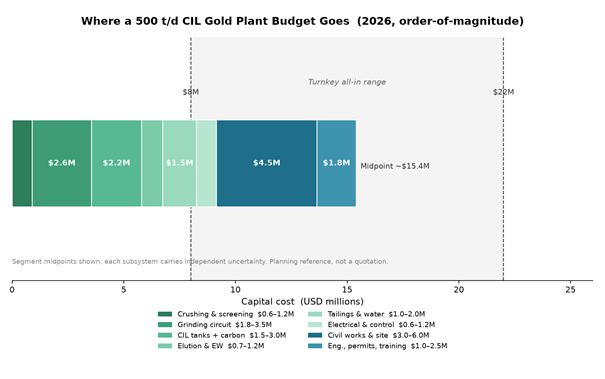
Stacked capital-cost breakdown for a 500 t/d CIL gold plant. Civil works and grinding dominate the budget; the midpoint total of about $15.4M sits inside the $8M–$22M turnkey range.
Figure 1. Stacked capital-cost breakdown for a 500 t/d oxide CIL gold plant in 2026. Each segment shows the midpoint; the full component range is in the legend. The dashed band marks the $8M–$22M turnkey all-in range, not the sum of low or high component estimates — components move independently. Planning reference, not a quotation.
OPEX: What It Costs to Run, Not Just Build
Capital gets the attention; operating cost decides whether the plant makes money. For CIL/CIP on amenable ore, processing runs roughly $15–$40 per tonne. Refractory ore pushes that to $40–$60/t because of the extra oxidation step and higher reagent load.
For a CIL/CIP plant on amenable oxide ore, one tonne of ore typically consumes roughly the following, based on operating data from comparable plants:
Input | Typical range per tonne |
Power | 15–30 kWh |
Sodium cyanide | 0.3–1.5 kg |
Activated carbon | 0.02–0.06 kg |
Lime / flocculant | 1–3 kg |
Fresh water (closed loop) | 0.3–1.0 m³ |
Labor | 0.1–0.3 man-hours |
Reading the lines:
· Energy is the heaviest cost — grinding alone is 40–60% of plant power. Remote sites on diesel feel it most; solar-hybrid microgrids (like the one on our Zimbabwe Reden project) change the math.
· Reagents — the sodium cyanide and activated carbon from the table above — are steady, recurring, and price-volatile.
· Labor and wear parts scale with automation: more instrumentation up front, fewer operators and unplanned stops later.
Well-run operations land around $900–$1,100 per ounce on an all-in sustaining basis, but that figure swings hard with grade, recovery, and power — it is a result of the plant, not a promise.
The Variables That Move the Number Most
1. Ore type — the biggest lever. Free-milling oxide is cheap to treat; refractory ore can double cost before you have poured concrete. Nothing else matters more.
2. Scale and economies. Larger plants cost more in absolute terms but less per tonne. A 3,000 t/d plant is not 30× a 100 t/d plant.
3. Process choice (CIL vs CIP). Same chemistry, different layout — CIL needs fewer tanks and commissions faster; CIP separates leach and adsorption for easier control. We broke this down in Gold CIL vs CIP.
4. Site and infrastructure. Remote ground adds 10–15% in inland logistics, plus power and water sourcing. "The Big Three" — power, water, security — decide more than the steel price in places like West Africa.
5. Environmental rules. Dry-stack tailings and cyanide destruction are now non-negotiable in many jurisdictions and add 12–18% to CAPEX — but they prevent the shutdowns that cost far more.
6. Schedule and modularity. A standard 500–1,000 t/d plant takes roughly 8–14 months (4–6 to build equipment, 4–8 to install and commission); every month of delay adds about 0.5–1% of total investment in owner's financing and temporary facilities. Modular plants cut CAPEX 15–30% at small-to-mid scale and can be relocated when a small deposit runs out — worth weighing against a fixed plant if your resource is limited.
7. Region. Remote West Africa typically adds 10–15% in inland logistics and can lift OPEX 30–60% where diesel is the only power; Southeast Asia adds 5–10% on logistics with steadier grids; high-latitude or alpine sites carry 5–10% winter-construction premiums and longer schedules. These adjustments reflect logistics and power conditions on recent West African, East African, and high-latitude builds — planning references, not fixed surcharges.
Two delivery examples: why "region" is not a footnote
The regional rule above is abstract until you see it on real plants. The same CIL/CIP family carries very different logistics loads depending on where it sits — here are two from our own fleet (capacities match the anchors in the next section):
Logistics factor | Guinea — 3,000 t/d CIP (West Africa) | Tanzania — 1,200 t/d CIL (East Africa) |
Port-to-site haul | Regional ports, then 600–1,200 km of interior road; rainy season cuts usable months | Dar es Salaam mineral corridor, shorter and more stabilized haul to most sites |
Site power | Grid thin or absent at site; plant often self-generates or builds a hybrid | Corridor grid closer, but remote sites still self-power |
CAPEX logistics load | ~+10–15% inland transport (the regional rule above) | Lower haul, but contingency and self-power still add |
OPEX power exposure | Diesel-only sites run ~+30–60% energy cost; hybrid or solar flips it | Similar at remote sites; corridor grid helps |
Schedule risk | Road + customs + rainy season extend lead time ~1–3 months | Less weather risk; customs still a factor |
On the Guinea plant, the inland haul and the self-built power were a bigger cost driver than the equipment list itself — which is exactly why a bare equipment quote is dangerous there. On the Tanzania project the port corridor shortened the haul, yet the remote-mine reality still meant self-power and a contingency cushion. Neither is "cheaper" on paper; the site decides.
We saw the mirror image on the Zimbabwe Reden 500 t/d EPC+M+O plant, where a 100,000 m² solar microgrid replaced diesel entirely and rewrote the OPEX case (see the OPEX section). And Mongolia's 1,000 t/d CIL carried the high-latitude winter-construction premium rather than a tropical-logistics one. These plants share the same process family but face opposite constraints, and all sit inside the same regional ranges above.
Why an Equipment Quote Is Not Your Project Budget
Most first-time owners budget only the supplier's equipment price, which covers machines, not the project. Before you trust any number, check it includes:
· Permits and studies — feasibility, environmental, social.
· Inland transport — getting equipment from a port like Tema or Abidjan to a remote site can add 10–15%.
· Site installation and commissioning — civil crews, cranes, commissioning runs.
· Operator training — usually 2 weeks on-site at startup.
· Spare parts inventory — budget 5–10% of equipment value on the shelf.
· Contingency — 10–15% is normal; remote or complex ore needs more.
· Financing and owner's camp — interest, admin, accommodation.
An EPC turnkey contract wraps all of this into one number you can finance — turning "I bought a plant" into "I can run a plant."
Budget-Readiness Checklist: What You Need Before a Real Estimate
You do not need a full feasibility study to get a useful budget range. You need these seven inputs:
8. A representative ore sample — not a grab sample, a proper composite.
9. Target capacity in t/d (or annual tonnes).
10. Head grade and mineralogy — Au g/t, and whether gold is free, sulfide-locked, or refractory.
11. Recovery target — what you need to clear to make the project work.
12. Site location and infrastructure — how remote, what is already there.
13. Water and power availability — grid, diesel, or hybrid.
14. Local environmental rules — tailings, cyanide, discharge limits.
Hand those to an engineering team and the path is fixed: sample → lab test (we run ours in a CNAS-accredited institute) → pilot if the ore is awkward → tailored flowsheet → budgetary estimate → detailed EPC quote. The test work is what turns a range into a number — which is why we never quote a plant we have not tested.
Real Deliveries as Anchors
The ranges above come from plants we have actually built. A few from our fleet, spanning both CIP and CIL:
· Guinea — 3,000 t/d CIP, part of a West African track record that also includes 6,000 and 15,000 t/d gold plants.
· Tanzania — 1,200 t/d CIL on blended oxide (2.4 g/t) and sulfide (10.7 g/t) ore.
· Zimbabwe — Reden 500 t/d EPC+M+O, powered by a 100,000 m² solar microgrid.
· Mongolia — 1,000 t/d CIL and Malaysia — 700 t/d CIL (CNMC).
Across this fleet, the same process family produced very different budgets — because grade, ore type, and site differed each time. The full set is in Gold CIL vs CIP: How to Choose the Right Gold Extraction Process. Neither circuit is "cheaper" in the abstract; each is chosen to match the ore and the owner's constraints.
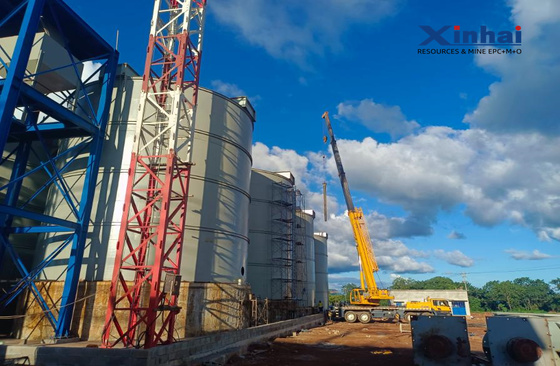
Guinea — 3,000 t/d CIP gold plant (West Africa), one of Xinhai's EPC deliveries in the region.
-Plant2-2.jpg "Xinhai-Tanzania-Gold-CIL-(Carbon-in-Leach)-Plant2-2.jpg")
Tanzania — 1,200 t/d CIL plant on blended oxide/sulfide ore (East Africa).
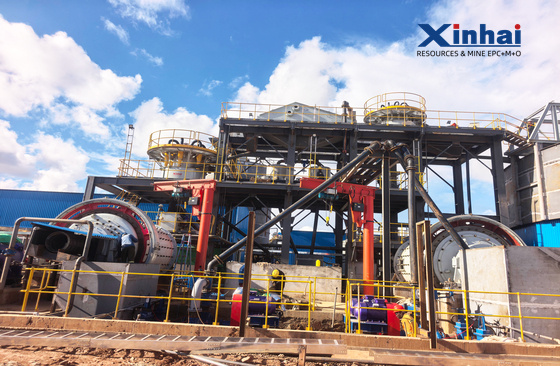
Zimbabwe — Reden 500 t/d EPC+M+O plant, powered by a ~100,000 m² solar microgrid.
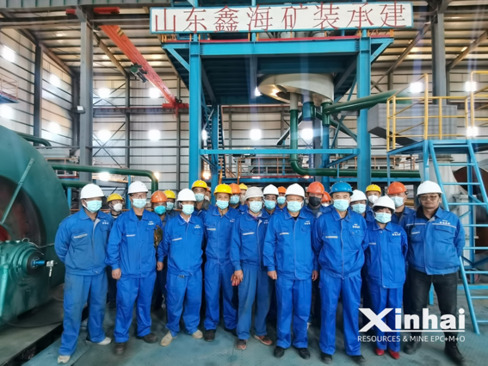
Mongolia — 1,000 t/d CIL plant; high-latitude site with a winter-construction build.
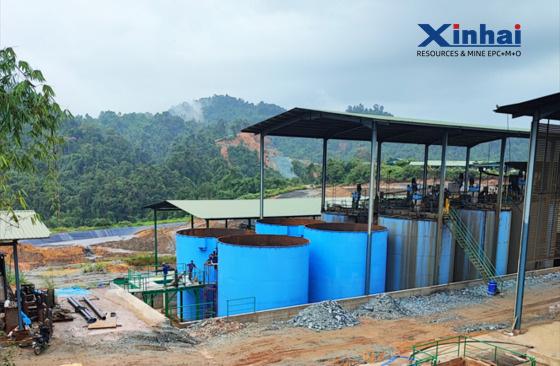
Malaysia — 700 t/d CIL plant (CNMC), an Xinhai EPC delivery.
Frequently Asked Questions
How much does a 500 t/d gold processing plant cost?
On amenable oxide ore with a standard CIL/CIP circuit, a turnkey EPC plant runs roughly $8M–$22M in 2026. Refractory ore or remote sites push it higher. That is the delivered plant, not an equipment list.
Is CIL or CIP cheaper?
CIL typically costs less in capital — leaching and adsorption share the same tanks, so you need fewer vessels and commission faster. The operating gap is small. The right choice depends on ore and operator, not price alone; see our CIL vs CIP breakdown.
What does it cost to process one tonne of gold ore?
For CIL/CIP on amenable ore, about $15–$40 per tonne in operating cost. Refractory ore runs $40–$60/t because of pre-oxidation. Energy and reagents are the largest lines.
How can I lower gold plant cost without losing recovery?
Front-load the metallurgical test, optimize the crushing product size (crushing instead of grinding saves real energy), and match automation to your crew. The biggest savings come from designing to the ore, not from stripping out equipment.
Do I need a test before budgeting?
Strongly recommended. A representative-sample test tells you the process, the grind, and the recovery — the three things that set the number. We run it in a CNAS-accredited lab and can give a budgetary estimate from the result before detailed engineering.
Get a Budget Estimate for Your Ore
If you are scoping a gold plant, send us a representative ore sample or your existing test data. We will run the metallurgy, recommend the process, and size a plant with a budgetary estimate you can take to financiers.
Talk to our engineering team: request a process design or budgetary quote via the Gold CIL Processing Line or Gold CIP Production Line pages.


 zz540045886@gmail.com
 Chat
Chat



 Consult
 Message
 Email
Email