1. Project Background: Upgrading a Conventional Chromite Plant and Rediscovering the Value of Polymetallic Tailings
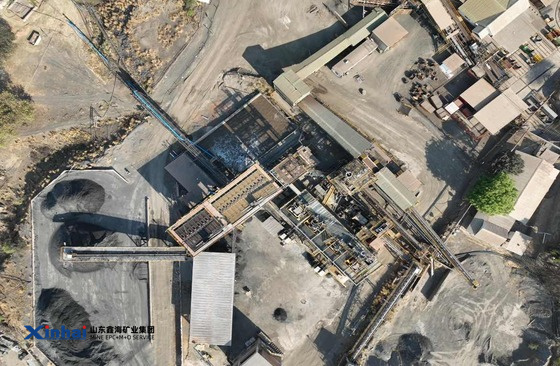
South Africa is one of the world’s most important mineral-producing countries, playing a critical role in global supply of chromite and platinum group metals (PGMs). This project is located in a mature mining area in South Africa and represents a systematic upgrade and expansion of an existing chromite processing plant, serving as a typical example of modern mineral processing plant renovation.
The original plant adopted a conventional gravity separation process, with a designed processing capacity of 360,000 tpa. As ore characteristics gradually changed and market requirements for chromite concentrate quality became more stringent, the original process increasingly showed its limitations, including low recovery rate, unstable concentrate grade, and insufficient comprehensive utilization of valuable minerals. At the same time, a significant amount of valuable metals—especially platinum (Pt) and palladium (Pd)—remained enriched in the historical tailings stored in the tailings storage facility, yet had never been systematically recovered.
Under these circumstances, the owner decided to upgrade the existing chromite processing plant. On one hand, high-intensity magnetic separation technology was introduced to significantly improve chromite grade and recovery. On the other hand, the magnetic separation tailings were further treated to realize the recovery of platinum and palladium from tailings, thereby substantially improving the overall economic performance of the mine.
After upgrading, the processing capacity of the plant was increased to 480,000 tpa. The feed sources include both underground mined ore and historically deposited tailings. This project is therefore a typical multi-source, polymetallic, comprehensive recovery mineral processing project. Xinhai provided complete services covering engineering design, equipment supply, and commissioning for this upgrade project. The plant achieved one-time successful commissioning and produced qualified products immediately, demonstrating strong engineering reliability and execution capability.
2. Design Scope: Systematic Upgrade Design under Existing Plant Conditions
This project is a processing plant upgrade implemented under existing site and building conditions, which required full consideration of system compatibility, spatial constraints, and continuous operation. As such, it posed high requirements for design rationality and engineering experience.
The upgraded plant is functionally divided into two main areas: the magnetic separation area and the flotation area.
Magnetic separation area:
Existing crushing, screening, and grinding systems were retained, while new magnetic separation, regrinding, and filtration facilities were added.
Flotation area:
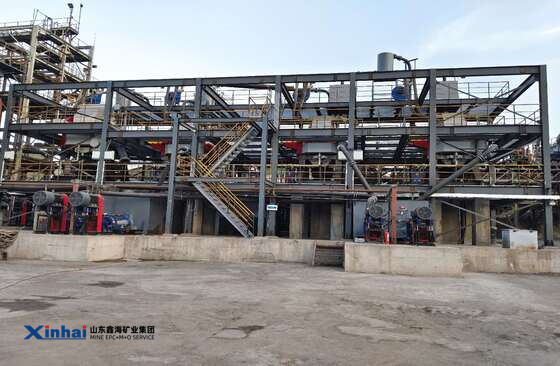
Existing plant buildings were fully utilized to arrange the platinum–palladium flotation system and concentrate pressure filtration system.
The design scope of this project includes, but is not limited to:
Construction drawing design for the 480,000 tpa processing plant upgrade project
High-intensity magnetic separation process design
Platinum–palladium flotation process design
Concentrate pressure filtration and dewatering system design
Reagent preparation and dosing system design
Power supply and distribution system design
Office and auxiliary facilities design
Piping network and utility system design
Without adding new civil works, the project achieved capacity expansion, performance improvement, and polymetallic recovery through process optimization and equipment upgrading, which was the core objective during the design stage.
3. Process Flow: Coordinated Treatment of Multiple Feed Sources and Tailings-Based Precious Metal Recovery
3.1 Ore Types and Overall Process Concept
The feed materials of this project are divided into two categories:
Underground mined ore
Historically deposited tailings from the existing tailings storage facility
Both materials are pretreated separately and then fed into the magnetic separation system. The magnetic separation tailings from both streams are further treated through regrinding and flotation, achieving the combined objectives of chromite concentrate recovery and platinum–palladium recovery from tailings.
The overall process route is characterized by:
Conventional and proven unit operation combinations
Regrinding of magnetic separation tailings followed by precious metal flotation
Process and reagent optimization based on fine-grained ore characteristics
3.2 Underground Ore Processing Flow
(1) Crushing and Screening System
Underground mined ore is hoisted to the skip ore bin via the hoisting system. The ore is then conveyed by belt conveyors to the coarse ore bin. From the coarse ore bin, ore is fed by a bar feeder into a jaw crusher for primary crushing. The crushed product is conveyed to a circular vibrating screen for classification.
The oversize product is sent to a hand-sorting belt. After manual sorting, hand-sorted concentrate is transported to the concentrate stockpile, while hand-sorted waste is hauled by trucks to the tailings storage facility. The undersize product is conveyed to the fine ore bin for storage, providing stable feed for subsequent grinding operations.
(2) Grinding and Magnetic Separation System
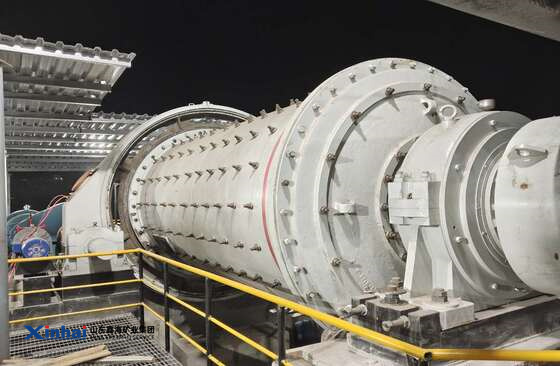
Ore from the fine ore bin is conveyed to a ball mill for grinding. The ground product is classified by a linear screen, with the oversize returning to the ball mill to form a closed circuit. The undersize is pumped to the low-intensity magnetic separation feed box.
The slurry from the low-intensity magnetic separation feed box flows by gravity to a linear screen for trash removal. The screen undersize flows to the high-intensity magnetic roughing feed box. The slurry then undergoes rough magnetic separation in a vertical ring high-intensity magnetic separator. The rougher tailings are pumped to an inclined plate thickener for dewatering and thickening.
The rougher magnetic concentrate is pumped to the high-intensity magnetic cleaner for cleaning. The cleaner concentrate is pumped to an inclined plate thickener for thickening, while the cleaner tailings are pumped to the scavenger magnetic separator. The scavenger tailings are pumped to the existing thickener and then sent to the tailings storage facility, while the scavenger concentrate is returned to the cleaner to form a closed circuit.
This upgraded magnetic separation system represents the most critical improvement compared with the original gravity separation process, significantly enhancing chromite concentrate grade and recovery.
(3) Chromite Concentrate Thickening System
The high-intensity magnetic cleaner concentrate is pumped to an inclined plate thickener for thickening. The thickener underflow is then pumped to a belt filter for dewatering. After filtration, the concentrate moisture content is reduced to below 15%, and the dewatered concentrate is conveyed to the concentrate stockpile for storage.
3.3 Magnetic Separation Tailings Regrinding and Platinum–Palladium Flotation System
(4) Magnetic Separation Tailings Regrinding System
The high-intensity magnetic rougher tailings are pumped to an inclined plate thickener for thickening. The thickened underflow is pumped to a hydrocyclone for classification. The cyclone underflow flows by gravity to a ball mill for regrinding, while the mill discharge flows back to the cyclone feed box, forming a closed circuit. The cyclone overflow is pumped to the flotation plant as flotation feed.
Through multiple rounds of technical evaluation and parameter comparison, the project ultimately determined that the highest platinum–palladium recovery was achieved when the grinding fineness reached 90% passing -200 mesh. This conclusion provides valuable reference for similar polymetallic tailings reprocessing projects.
(5) Platinum–Palladium Flotation System
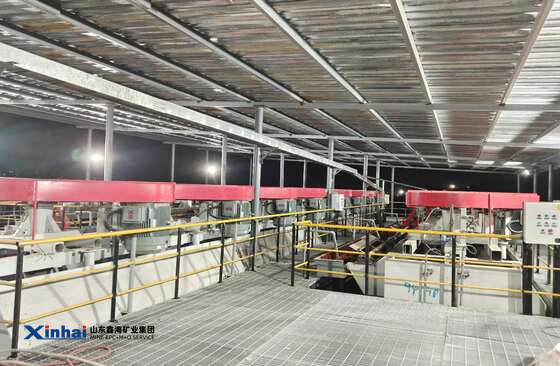
The reground tailings slurry is pumped to the flotation plant and fed into conditioning tanks. After reagent addition and conditioning, the slurry enters the flotation circuit. A flotation flowsheet of two roughing stages, two scavenging stages, and three cleaning stages is adopted.
The flotation tailings are pumped to the tailings storage facility, while the flotation concentrate flows by gravity to the concentrate conditioning tank for temporary storage.
It is worth noting that this project belongs to fine-particle flotation:
In general, flotation at 80% passing -200 mesh is considered fine-particle flotation;
For this ore, finer grinding was required to fully liberate precious metals;
Compared with conventional flotation, the reagent system is more complex, requiring a greater variety of reagents and stricter control.
Despite these challenges, stable operation and effective precious metal recovery were achieved through a mature process configuration and optimized operating parameters.
(6) Flotation Concentrate Dewatering System
The flotation concentrate is pumped from the conditioning tank to a diaphragm filter press for pressure filtration. The filtered concentrate is conveyed by belt conveyor to the concentrate storage area.
4. Existing Tailings Processing Flow: A Typical Practice of Resource Reutilization
The historical tailings stored in the tailings storage facility are scrubbed and conditioned, then pumped directly into the magnetic separation system. Subsequent processing steps are identical to those of the underground ore.
Through this process, materials previously regarded as waste are transformed into valuable resources, achieving chromite recovery and platinum–palladium recovery from tailings, fully reflecting the modern mining concept of tailings comprehensive utilization and resource recycling.
5. Technical Highlights and Engineering Value Summary
Overall, this project demonstrates the following key characteristics and values:
l Special and high-value ore type:
The project involves both chromite and platinum group metals (platinum and palladium), representing a typical polymetallic and precious metal recovery project.
l Strong demonstration of tailings comprehensive utilization:
Valuable metals are recovered from historical tailings, realizing resource reutilization and aligning with green mining and sustainable development concepts.
l Uncommon application under conventional process frameworks:
Platinum–palladium recovery is achieved through magnetic separation followed by regrinding and flotation, which is not commonly seen in similar projects.
l Mature and reliable fine-particle flotation technology:
Optimal grinding fineness was determined based on ore characteristics, verifying the feasibility of fine-particle flotation for precious metal recovery.
l Engineering experience in a mining-developed country:
The project is located in South Africa, a country with a highly developed mining industry, where design standards, construction quality, and commissioning requirements are stringent.
l One-time successful commissioning:
Despite the absence of beneficiation test work, the plant achieved one-time successful commissioning and produced qualified products, demonstrating solid engineering experience and technical strength.


 zz540045886@gmail.com
 Chat
Chat




 Consult
 Message
 Email
Email