1. Project Overview
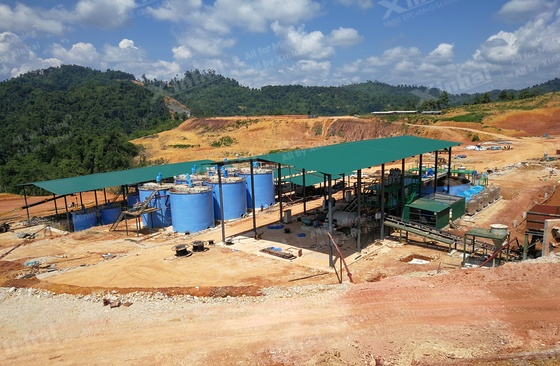
The 800 t/d Gold CIL Expansion Project for CNMC in Malaysia was carried out on the basis of an existing 500 t/d processing plant. The objective was to accommodate an additional 300 t/d of throughput while maintaining continuous production. As a typical expansion project, no new metallurgical testwork was required. Xinhai Mining undertook the process design, supply of key equipment, and site installation guidance, while installation work was completed by the client.
The original plant had no reserved expansion space, which required reconfiguration of the existing layout and the addition of several new structural bays. The upgraded plant has now been commissioned, reaching an actual capacity of 850 t/d, exceeding the design target.
Gold grade: 4.70 g/t
Design recovery: 93%
Actual recovery achieved: 95%
2. Design Scope
2.1 Main Design Tasks
The engineering design addressed the following components:
Construction of a new grinding feed system and provision of conveyor design parameters (fabricated by the client).
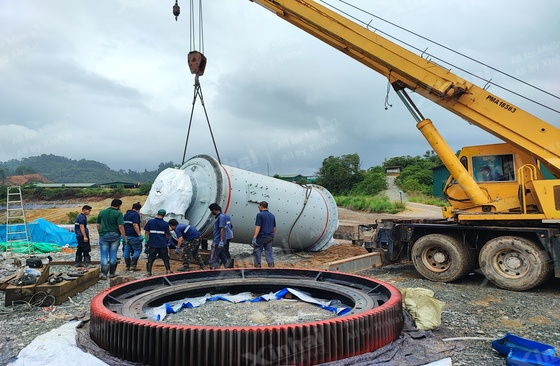
Addition of a new grinding and classification system.
Installation of an additional thickening/classification pump.
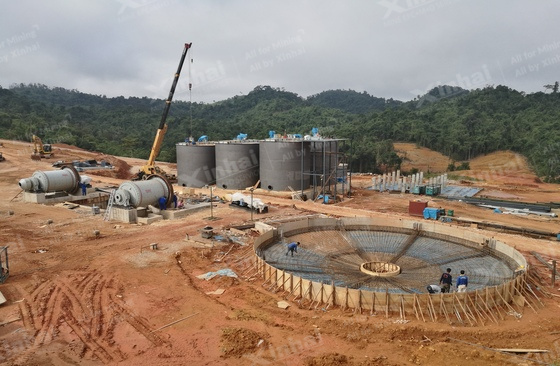
Addition of four SJ7.0×7.5 leaching tanks and full redesign of associated slurry, air, water, and utility pipelines.
3. Process Arrangement
The expansion adopted the following flowsheet configuration:
- One-stage grinding
- Two-stage classification
- One-stage desliming/thickening
The final grinding product specification is 85% passing -200 mesh, meeting downstream CIL leaching requirements.
4. System Modifications
4.1 Grinding and Classification
MQYg2445 overflow ball mill
FLG2000 high-weir spiral classifier as the primary classifier
XCII 250×3 hydrocyclone cluster as the secondary classifier
Primary classifier overflow feeds the cyclone group; underflows from both stages return to the mill.
The previous DZS0918 linear screen was reassigned to the new desliming duty.
The original screening position was equipped with a DZS1225 to resolve excessive residue issues noted before the upgrade.
4.2 Leaching System
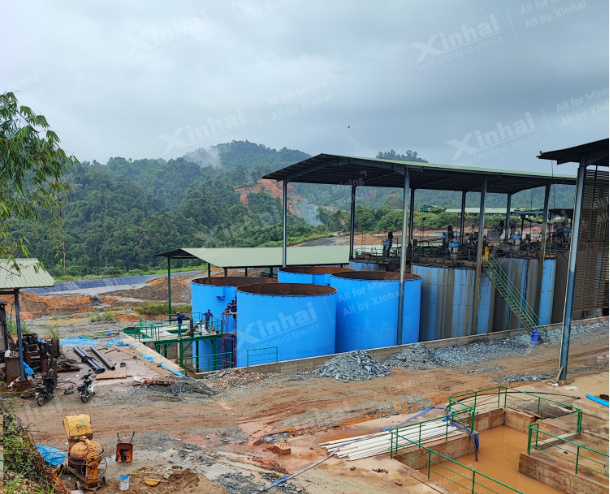
The original system consisted of six SJ7.0×7.5 leaching tanks. The expansion added four additional tanks of the same model (shell size 7.0×7.0 m, using SJ7.0×7.5 impeller assemblies).
Other adjustments included:
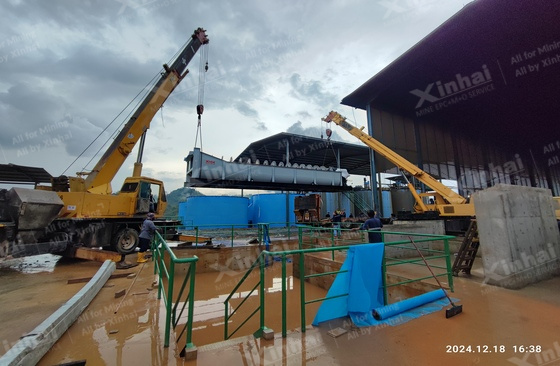
Replacement of the prior safety screen with a DZS1225 unit.
Installation of a TRRE-250 high-pressure roots blower to address insufficient air supply to tanks No.5 and No.6 and support all newly added tanks and carbon transfer.
Relocation of the safety screen platform to the southwest side of the tank area.
Construction of foundations and installation works for all four new tanks.
Standardization of pipelines in the new system to DN200 welded steel pipe, replacing earlier DN150 sections where required.
Elevation adjustment:
The new tank arrangement resulted in a 1.2 m reduction in elevation, eliminating gravity flow. A slurry pump was therefore added to lift the screened slurry to two existing red tanks, now functioning as buffer tanks. Piping between these tanks and the SJ4.5×5.0 mixing tank was also connected. If future flow capacity is insufficient, an additional pipe of the same specification can be installed.
4.3 Filter Press Section
Modifications included:
Addition of one XMZ600/2000 chamber filter press
A corresponding feed pump
A new bottom conveyor
The feed pump sends slurry from the red tanks to the press via PE pipelines, while filtrate flows back by gravity to the existing filtrate tank.
The client extended the existing conveyor to serve four filter presses.
4.4 Water Supply
Water supply relies on a high-level water tank, covering both new and return water needs.
New pipelines were installed using PE piping, easily sourced locally.
No additional water pumps were required.
4.5 Other Adjustments
No new pipeline pumps were added for filter press operation.
The original DZS0918 screen was integrated into the new system.
The original safety screen may be installed at the No.1 leaching tank, used in the barren carbon grinding system, or kept as reserve.
5. Project Highlights
The expansion provided several practical advantages:
Throughput beyond design capacity: 850 t/d achieved against an 800 t/d design.
Optimized layout under tight space limitations, demonstrating strong capability in customized plant expansion.
Extensive reuse of existing equipment, reducing the required capital investment.
Use of prefabricated steel structures, shortening assembly time and aligning construction progress with system commissioning.
Extended carbon safety screen (from 1.5 m to 2.5 m) to reduce maintenance and operating cost.
Adjustment of slurry density in leaching tanks without halting production.
Pipeline modifications completed during continuous plant operation, ensuring stable output.
Motors and gearboxes have operated with zero failure since commissioning.
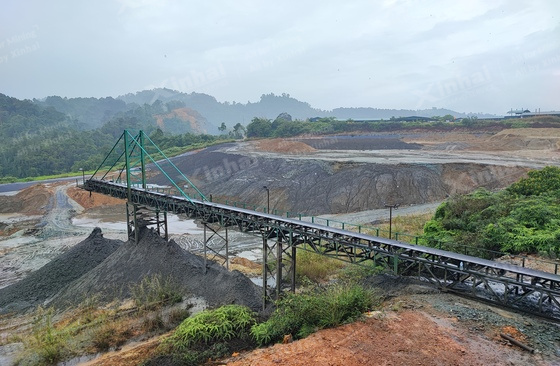
The Malaysia 800 t/d CIL expansion case demonstrates effective capacity increase by integrating new grinding, leaching and filtration units into an operating processing line. Constrained site conditions and the requirement to maintain continuous production dictated a compact, precisely planned layout, selective equipment additions, and practical piping modifications. The project’s use of prefabricated steel structures, reuse of existing units and staged commissioning proved particularly effective under real production constraints.


 zz540045886@gmail.com
 Chat
Chat



 Consult
 Message
 Email
Email